
The photos always look the same. A shrink-wrapped pallet, stacked neat, captioned with a retail value that is four times the asking price. And every FBA seller has at some point wondered whether the maths is real.
Sometimes it is. Often it is not, and the difference comes down to knowing what type of pallet you are looking at before you pay for it.
Amazon Pallets Wholesale: The Three Types
Almost everything sold as an Amazon pallet falls into one of three categories, and they behave completely differently.
Customer returns
Items customers sent back. Some are genuinely unused — wrong size, changed their mind. Others are damaged, missing parts, or were returned for a reason nobody recorded. Manifested returns list what is inside; unmanifested ones do not, and unmanifested is where most losses happen.
Overstock and shelf pulls
Unsold inventory clearing warehouse space. Usually new and sealed, sometimes with damaged outer packaging. This is the most predictable of the three and generally the most expensive per unit.
Liquidation lots
Mixed loads, often from multiple sources, sold by weight or pallet rather than by contents. Cheapest per unit, highest variance. You are buying a probability distribution, not a product.
Amazon Wholesale Pallet Pricing — Do the Unit Maths
The headline number is the trap. A pallet at $1,200 against a $5,000 retail manifest sounds like a 4x return. Work it through properly:
- Pallet cost: $1,200
- Freight: $150–400 depending on distance
- Unsellable on arrival: typically 20–40% of returns pallets
- Time to sort, test, photograph, and list: often 8–15 hours
- FBA fees on whatever does sell
Sellers who do well with pallets almost always have somewhere to move the unsellable portion — a local outlet, eBay, a wholesale contact. Sellers who struggle are usually the ones who assumed everything would sell on Amazon at full price.
Amazon Pallet Liquidation Wholesale: Where Sourcing Actually Happens
Amazon runs its own liquidation channel, and there are established B-stock marketplaces that source from major retailers. Both require business registration and, in most cases, a resale certificate.
Be cautious with anything sold through social media or a marketplace listing with no verifiable business behind it. The most common scam in this space is not a bad pallet — it is a pallet that never ships.
Buy Liquidation Pallets Online — Or Buy Case Packs?
This is the question worth sitting with, because the two models suit very different sellers.
Pallets suit people with warehouse space, time to sort, and multiple sales channels. The margin comes from labour and from being able to move mixed inventory.
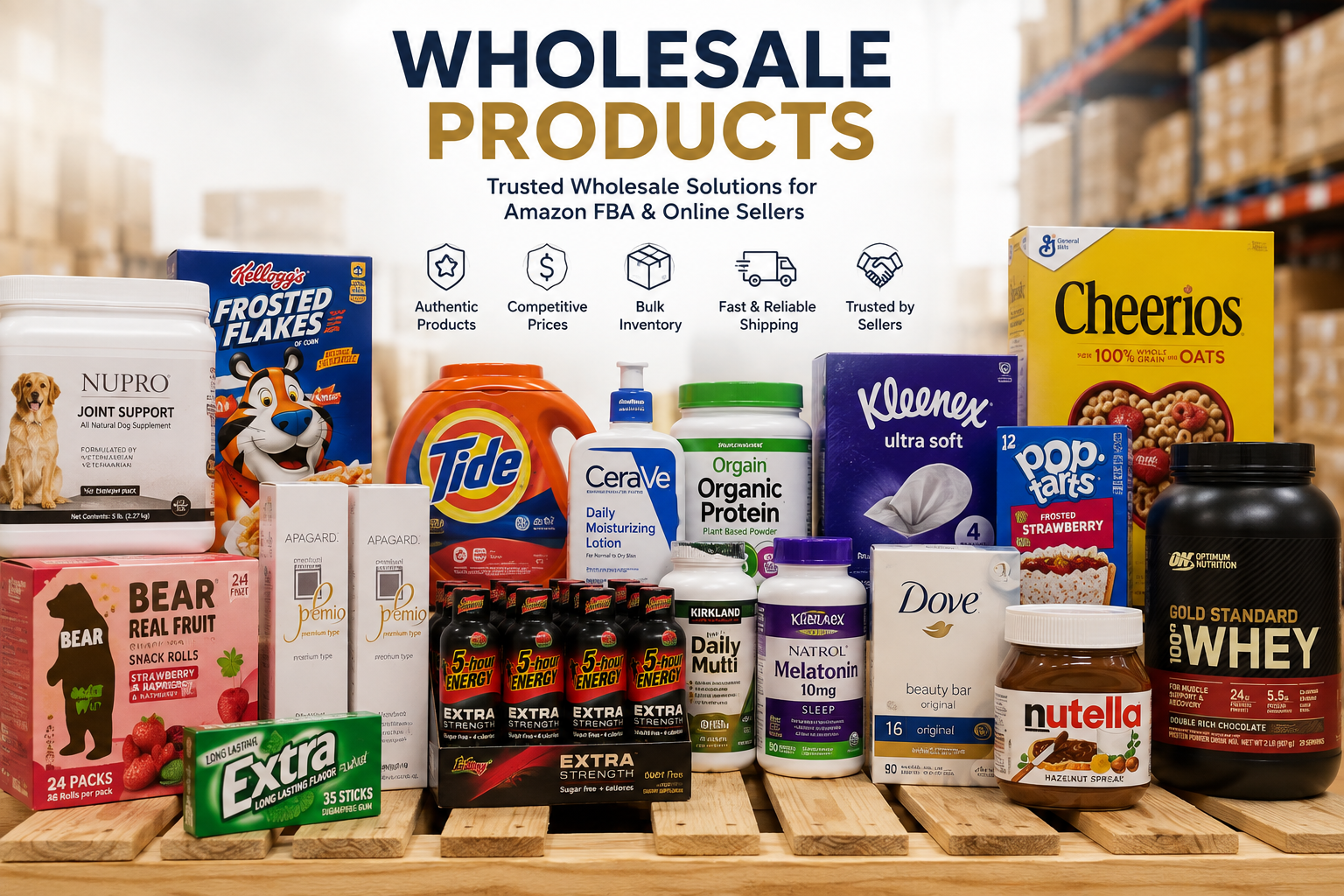
Case-pack wholesale suits people who want to build repeatable listings. You know exactly what arrives, you can reorder the same SKU when it sells, and you can forecast margin before you commit. There is no sorting labour and no unsellable percentage.
Neither is better in the abstract. But if your plan is to build a catalogue of listings you restock, pallets fight against that — every load is different, so nothing is repeatable.
Amazon Returns Wholesale: The Gating Problem
One thing that catches new sellers out: pallet purchases rarely come with invoices that satisfy Amazon’s ungating requirements. If your category needs approval, a liquidation invoice usually will not clear it. That alone pushes many sellers toward authorized distributors once they hit gated brands.
The Practical Answer
If you have space, time, and a second sales channel, pallets can work — buy manifested, start with one, and track your true unit economics rather than the headline manifest value.
If you are building an FBA business around repeatable, restockable listings, case-pack wholesale from an authorized distributor is the more direct route. Less exciting, more forecastable, and it comes with the paperwork that keeps you ungated.