
Type “amazon wholesale” into Google and you’ll get a wall of recycled listicles, most of them written by people who’ve never actually placed a wholesale order. This one is different — it’s written from the supply side, by a team that ships FBA-ready inventory to sellers every week. No filler, no “10 tips” fluff. Just what amazon wholesale actually means, what it costs, and how to do it without losing money on your first order.
What “Amazon Wholesale” Actually Means
Amazon wholesale is the practice of buying brand-name products in bulk directly from a manufacturer or authorized distributor, then reselling them on Amazon at a markup. It’s different from private label (where you create your own brand) and different from retail arbitrage (buying single units from retail stores to resell). With wholesale, you’re moving products that already have a sales history, an established customer base, and — critically — proof that people buy them.
That last part is what draws sellers to this model. You’re not gambling on whether a product idea will work. You’re sourcing something Amazon’s own data already shows is selling.
Why Amazon Wholesale Still Works in 2026
Third-party sellers now make up roughly 61–62% of everything sold on Amazon — the highest share on record, and it’s been climbing steadily for years. That growth hasn’t come from more sellers entering the market; new seller registrations actually hit a decade low in 2025. It’s come from existing sellers scaling smarter, and wholesale is one of the few sourcing models built for that kind of scale.
Here’s the honest math, though. FBA sellers typically give up 30–35% of revenue to referral fees, fulfillment, and storage. That means a wholesale product needs real margin room before those fees even come out — anyone glossing over that math isn’t being straight with you. A good wholesale supplier accounts for this by sourcing products with margins that survive Amazon’s fee structure, not just products that sound good in a catalog.
Amazon Wholesale vs. Amazon Wholesale FBA: A Distinction Worth Knowing
Sellers often use “amazon wholesale” and “amazon wholesale FBA” interchangeably, but they’re not quite the same thing. General wholesale sourcing just means buying bulk product to resell — through any channel. Amazon wholesale FBA specifically means sourcing inventory that’s compliant with Amazon’s fulfillment requirements: FNSKU labeling, approved packaging, and shipments routed correctly to Amazon’s fulfillment centers.
A supplier can be great at general wholesale and still cause headaches if they don’t understand FBA prep. This is where a lot of new sellers get tripped up — they order from a wholesaler who’s never actually shipped to an Amazon fulfillment center, and the inventory gets held up or rejected on arrival.
What a Trustworthy Wholesale Supplier Actually Looks Like
Every wholesale site claims to be “verified” or “trusted.” Here’s what that should mean in practice:
Invoices that hold up. Not a receipt — an actual invoice with the supplier’s business details, itemized products, and quantities. You’ll need this the day Amazon asks you to prove authenticity on a branded listing, and if you sell branded goods long enough, that day comes.
A traceable line back to the brand. Ask directly whether the supplier is authorized to distribute the brands in their catalog, or whether the product has passed through several unverified hands first. Every extra link in that chain is a place where counterfeit or grey-market product can enter.
Consistency, not hype. The most reliable suppliers rarely have flashy marketing. What they have is the same catalog structure month after month, stock levels that match what they actually say they have, and a team that answers questions the same day.
How EN Wholesale Approaches Amazon Wholesale Sourcing
This is where we’ll speak plainly about how we do things, since it’s the part most guides can’t answer from experience.
- Every product ships with a compliant invoice, built specifically to meet Amazon’s authenticity and ungating documentation standards — not a generic packing slip.
- We work only with authorized distributors and manufacturers, so there’s a traceable line from brand to shelf on everything in our catalog.
- Inventory is FBA-ready before it ships — properly labeled, packaged, and prepped so it moves through Amazon fulfillment centers without delays or added prep costs on your end.
- Our catalog updates daily, covering Beauty & Personal Care, Grocery & Gourmet Food, Health & Household, Pet Supplies, and Toys & Games — so sellers aren’t stuck reordering the same slow-moving SKUs.
- Free shipping on orders over $10,000, which matters more than it sounds like once you’re running the margin math on a full pallet order. our full USA distributor guide
We’re not going to pretend every order is risk-free — no wholesale supplier can promise that. What we can promise is that when something goes wrong, there’s a real invoice, a real account manager, and a real business behind the transaction.
How to Vet Any Amazon Wholesale Supplier (Including Us)
Before wiring money anywhere, run this checklist — we’d rather you ask these questions than skip them:
- Request a sample invoice and confirm it includes everything Amazon requires for an authenticity dispute
- Confirm accepted payment methods — legitimate suppliers use ACH or wire transfer, not pressure toward informal payment apps
- Ask about the return or damage policy before your first order, not after
- Confirm the supplier ships FBA-prep-ready, so your shipment doesn’t get rejected at the fulfillment center
- Search the business name for reviews from other Amazon sellers — five minutes of searching saves a lot of regret
- our full supplier vetting guide
Building a Sourcing Strategy That Doesn’t Depend on One Supplier
Even a great wholesale supplier is a single point of failure if it’s your only one. As your business scales:
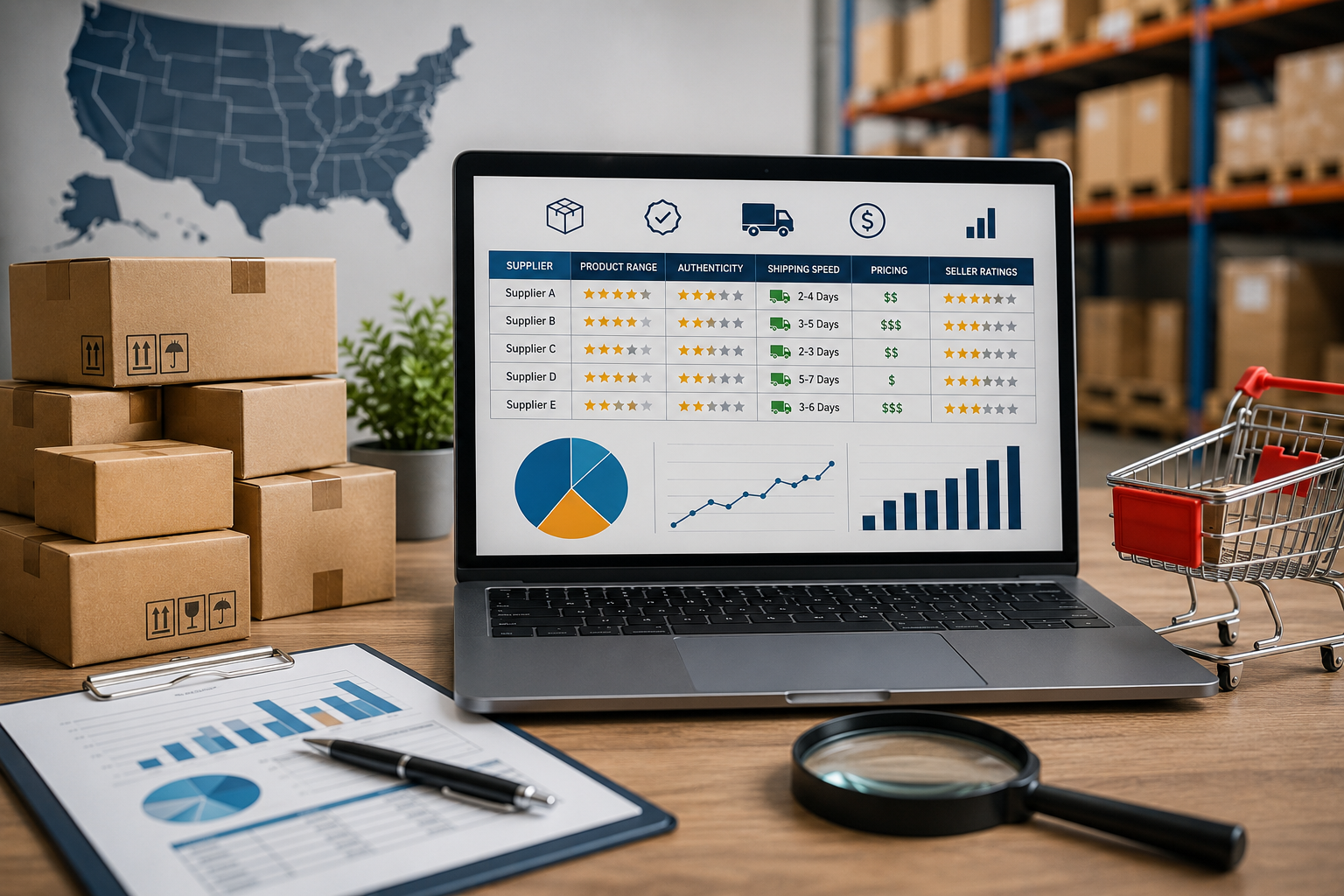
- Work with 3–5 verified suppliers see how the major suppliers compare across your core categories, not just one
- Track supplier performance the same way you’d track any other business metric — on-time delivery, product condition, responsiveness
- Negotiate better terms as your order volume grows, since most wholesale suppliers (including us) offer tiered pricing for consistent, larger orders
- Stay aware of category-specific compliance — supplements, cosmetics, and pet products often carry extra Amazon documentation requirements regardless of supplier reputation
Final Thoughts
Amazon wholesale isn’t a shortcut — it’s a supply chain decision that either protects your margins and your account, or slowly erodes both. The sellers who do well with it treat supplier vetting the way they’d vet any real business partner, because that’s what it functionally is.
If you’re ready to see what’s actually in stock, apply for a wholesale account and our team will walk you through current inventory and pricing.