
If you’ve searched for “Amazon wholesale suppliers” more than once, you already know the problem. Every result reads the same — a vague list of “top 10 suppliers,” none of it verified, half of it outdated, and none of it telling you what actually happens when a wholesale deal goes wrong. This guide is written differently. It’s built around what sellers actually run into: gated categories, invoice rejections, suppliers who ghost after the first order, and the very real math of margins once Amazon takes its cut.
Why Wholesale Sourcing Is Still the Safer Bet in 2026
Third-party sellers now account for roughly 61–62% of everything sold on Amazon, a share that’s climbed steadily since 2019 and hit an all-time high through 2025. That’s not a small marketplace niche — it’s the majority of Amazon itself. But here’s the part most guides skip: the seller base is getting harder to break into, not easier. New seller registrations hit a decade low in 2025, while the top 1% of sellers now capture close to a quarter of total marketplace revenue.
What that tells you is simple. The sellers still winning aren’t the ones chasing trends — they’re the ones with a dependable supply chain. That’s exactly where Amazon wholesale suppliers come in: you’re not betting on a product going viral, you’re moving inventory that’s already selling, from brands people already trust.
The tradeoff is real too. FBA sellers typically hand over 30–35% of revenue in referral fees, fulfillment costs, and storage — so the margin on a wholesale product has to survive that math before you commit to it. Anyone telling you wholesale is a guaranteed win without doing that arithmetic first isn’t being straight with you.
Amazon FBA Wholesale Suppliers vs. General Wholesale: The Difference That Matters
People search “Amazon wholesale suppliers” and “Amazon FBA wholesale suppliers” almost interchangeably, but the distinction matters more than it looks.
- General wholesale supplier — sells bulk product to any reseller: retail stores, other online marketplaces, dropshippers, wholesale buyers of any kind.
- Amazon FBA wholesale supplier — understands Amazon’s specific rulebook: FNSKU labeling, poly-bagging standards, ungating documentation, and shipment routing directly to Amazon fulfillment centers.
A supplier can be excellent at general wholesale and still cause you real problems if they don’t understand FBA compliance. This is the single biggest thing sellers get burned by — they assume “wholesale supplier” and “Amazon FBA wholesale distributor” mean the same skillset. They don’t.
If your business model runs specifically through Fulfillment by Amazon — and with roughly 82% of active sellers using FBA in some form, that’s most of you — you need a supplier from the second category, not the first For the broader picture of how Amazon wholesale sourcing works end-to-end, see our complete Amazon wholesale guide.
What “Trusted” Actually Means (Not the Marketing Version)
Every wholesale site claims to be a “trusted wholesale distributor USA“-based partner. It’s meaningless as a phrase until you check for the specific things that make it true:
1. Invoices that hold up under Amazon’s scrutiny
Not a receipt. An actual invoice with the supplier’s business name, EIN or resale registration reference, itemized products, and quantities. This is the document you’ll need the day Amazon flags your listing for authenticity — and it will happen eventually if you sell branded goods long enough.
2. A traceable path back to the brand
Ask the direct question: are you an authorized distributor, or are you buying from someone who’s buying from someone? Every extra link in that chain is a place where counterfeit or grey-market product can enter — and Amazon’s brand protection systems caught over 99% of suspected infringing listings before they were even reported in 2024, which tells you how aggressively this gets policed now.
3. Consistency over hype
The suppliers worth working with rarely have the flashiest websites. They have the same catalog structure month after month, the same account manager answering emails, and stock levels that match what they say they have. If a supplier’s inventory list looks too good — every product in stock, every price rock-bottom — that’s usually the first sign something’s off.
How Sellers Actually Get Burned Sourcing Wholesale
This is the part most “how to find suppliers” content skips entirely, and it’s the part that actually protects you:
- Paying upfront to an unverified account with no traceable business registration — the single most common way new sellers lose money in wholesale sourcing.
- Buying “overstock” or “liquidation” branded goods without checking whether the brand allows resale — this triggers IP complaints even when the product itself is 100% authentic.
- Assuming low MOQ means low risk — smaller minimum orders are often how less-established suppliers get their foot in the door before proving reliability.
- Skipping the return policy conversation — and then discovering, after a damaged shipment, that there isn’t one.
None of this means wholesale sourcing is risky by nature. It means it rewards sellers who ask uncomfortable questions before they pay, not after.
Vetting Checklist: Amazon FBA Suppliers Worth Your Time
Before wiring money to any Amazon FBA wholesale supplier, run through this:
- Request a sample invoice and confirm it has everything Amazon requires for an authenticity dispute
- Search the business name plus “review” or “scam” — five minutes of searching saves a lot of regret
- Confirm payment methods — established suppliers use ACH or wire transfer; heavy pressure toward informal payment apps is a red flag
- Ask directly about their return/damage policy before the first order, not after
- Confirm they ship FBA-prep-ready (proper labeling and packaging) so your shipment doesn’t get rejected at the fulfillment center
Finding Amazon FBA Wholesale Distributors in the USA
Sourcing domestically isn’t just convenient — it’s a compliance advantage. Amazon FBA wholesale suppliers in the USA mean shorter transit times to fulfillment centers, invoices that already match Amazon’s documentation expectations, and none of the customs paperwork that slows down international freight.
Realistic starting points for finding them:
- Seller communities (private groups, forums) where other sellers name suppliers they’ve actually ordered from — not just recommended in passing
- Direct manufacturer outreach, asking brands for their list of authorized regional distributors
- Trade shows, still one of the most reliable ways to meet a real person behind a supplier account before you commit money
- Resale certificate registration, which legitimate B2B wholesale accounts require — if a “supplier” skips this step entirely, be cautious For a deeper, distributor-specific breakdown, read our full USA distributor guide
What “Best” Actually Looks Like for Your Business
There’s no single answer to “best wholesale suppliers for Amazon FBA” — the right supplier depends on your category, your capital, and how much hands-on prep work you’re willing to do yourself. But the sellers who are still profitable after 12 months (roughly 58–65% of sellers reach profitability in that window, per recent seller surveys) share a pattern: they don’t rely on one supplier.
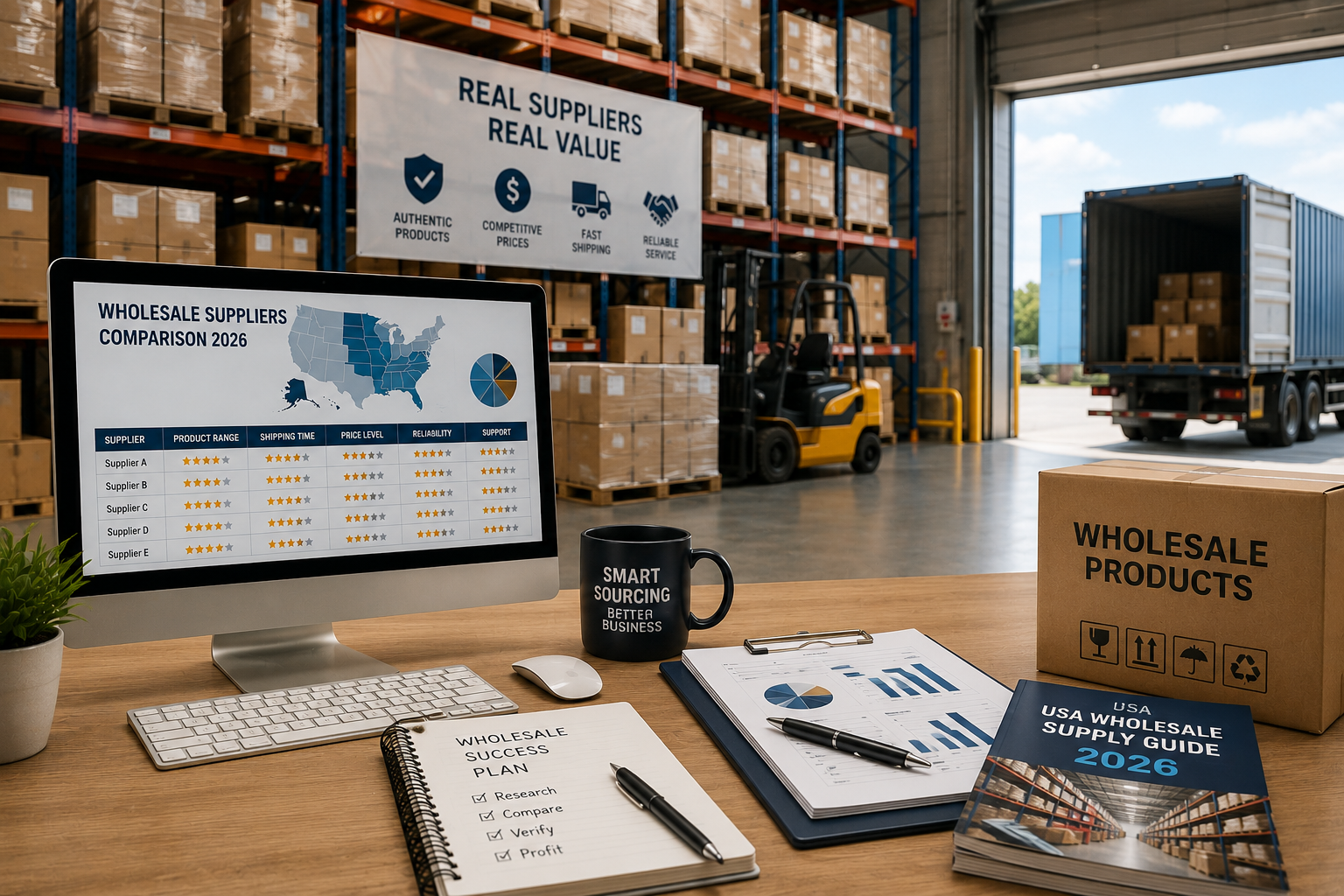
Build toward 3–5 verified suppliers, not one. Track each on delivery reliability, product condition on arrival, and how they handle problems — because how a supplier responds when something goes wrong tells you more than any sales pitch does Not sure where to start comparing options? See how the major suppliers actually stack up.
Final Thoughts
Amazon wholesale suppliers — and specifically FBA-ready wholesale distributors in the USA — aren’t a shortcut. They’re a long-term operating decision that either protects your account and your margins, or quietly erodes both. The sellers who get this right treat supplier vetting the same way they’d vet a business partner, because that’s functionally what it is.
If you take one thing from this guide: ask for the invoice before you ask for the discount. Everything else follows from there. Ready to see current stock? Apply for a wholesale account and our team will walk you through pricing